How I Story Board a New Keynote as a Speaker and Author to Avoid Stage Fright
Jul 10, 2026
As someone who has been speaking on stages for over a decade, I know the power is in the planning to avoid the dreaded stage fright. Speakers and authors have all kinds of ways to plan their books, keynotes, and breakout sessions. This is mine. I call it story boarding.
It’s been 4 years since I’ve come out with a new book, keynote, or break out session. That means it’s time to dust off these planning and writing skills and create something new. I’m focusing on Resilience and what it really takes to bounce back from challenges so you can live & lead well in times of crisis. I'm also updating my UNBROKEN keynote to expand the topic and include what happens to your physical, emotional, and mental health when you endure decades of trauma.
Here’s how it goes…
Step #1 Collect and Organize the Content
If you are a Creative and use social media to market and connect with your audience, you probably have the nuts and bolts of your next speech in your content! It's the secret to our success and getting books published quickly, too. Step #1 in my story boarding process is to collect and organize all the content I have already written on a topic from past speaking engagements, events, blogs and social media posts. Fair warning, this takes awhile and can be overwhelming if you have a lot of content on a certain topic. Trust me, the words you are looking for are already in the content you've written.
Step #2 Put it on a Post-it
After I have collected and organized the details I want to include in my new keynote, I write out all the talking points I might want to include on Post-it notes. I include snippets of stories, facts, details I want to include or add brand new. I put all the Post-it's on the mirror closet doors in my office to visually plan out the flow. I can quickly see what should be grouped together, what’s missing, or what I have too much of.
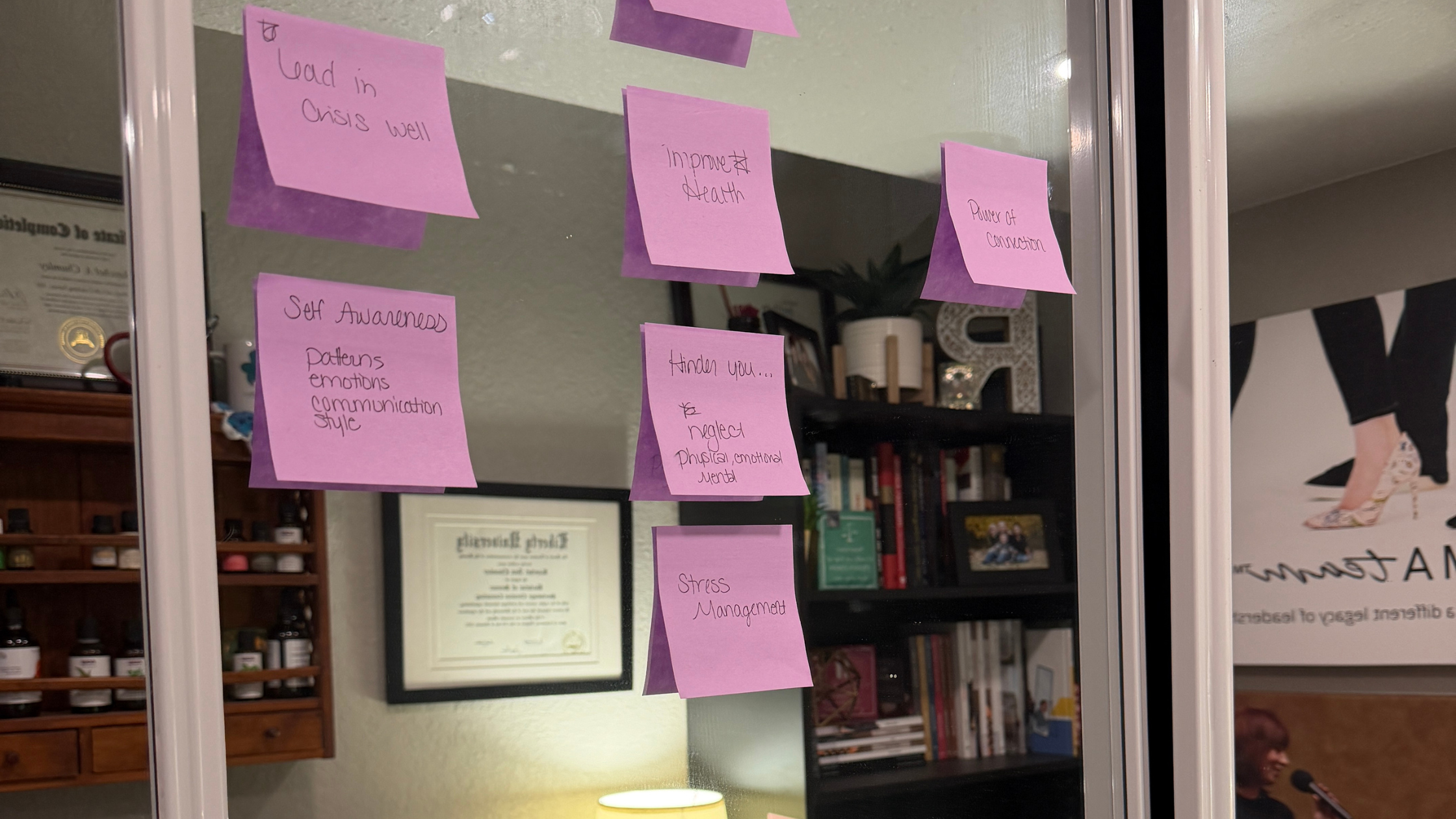
Step #3 Pick 3 Main Objective & Talking Points
After I have visually planned the talk with my Post-its, I edit the talking points to three main objectives. I move the notes until I have all of the ideas under 3 main objectives or talking points.
Step #4 Figure out the Title, Tagline, and Synopsis
Next, I try out different titles to pick the best option. I use the Headline Analyzer to see if the title will attract to the audience on an intellectual, spiritual, or emotional level. It gives you so much date to create a killer title. Click the link here to find the one Coach Mandy and I both use at least once a week. Then I can write the synopsis to pitch to events and conferences looking for speakers. This is usually 1-2 paragraphs.
Step #5- Write the Words
Then I start to write! I follow the synopsis and key talking points I already created. I make the plan and I follow the plan. And it’s practically full proof and almost guarantees stage fright won't sabotage me. I also practice it out loud and time it out. Over and over again until it rolls off my tongue and I'm under the allotted time given.
I’ve been story boarding my keynotes this way for over 12 years and I'm prepared and confident to hit the stage. I would never just "wing it.” That’s when you ramble, get lost, forget the main points, get stage fright, clam up, and go over or short on time. That's a nightmare come to life I want to avoid at all cost. So I don't leave anything to chance... I prepare.
With Grace & Grit,
~Coach Raychel
P.S. If this is something you want help with I would love to come along side you, I love helping speakers and authors create their next big talk! Book your first session here! If you’re looking for a speaker for your next event, and could use this topic, I’m your girl. Start the conversation here.